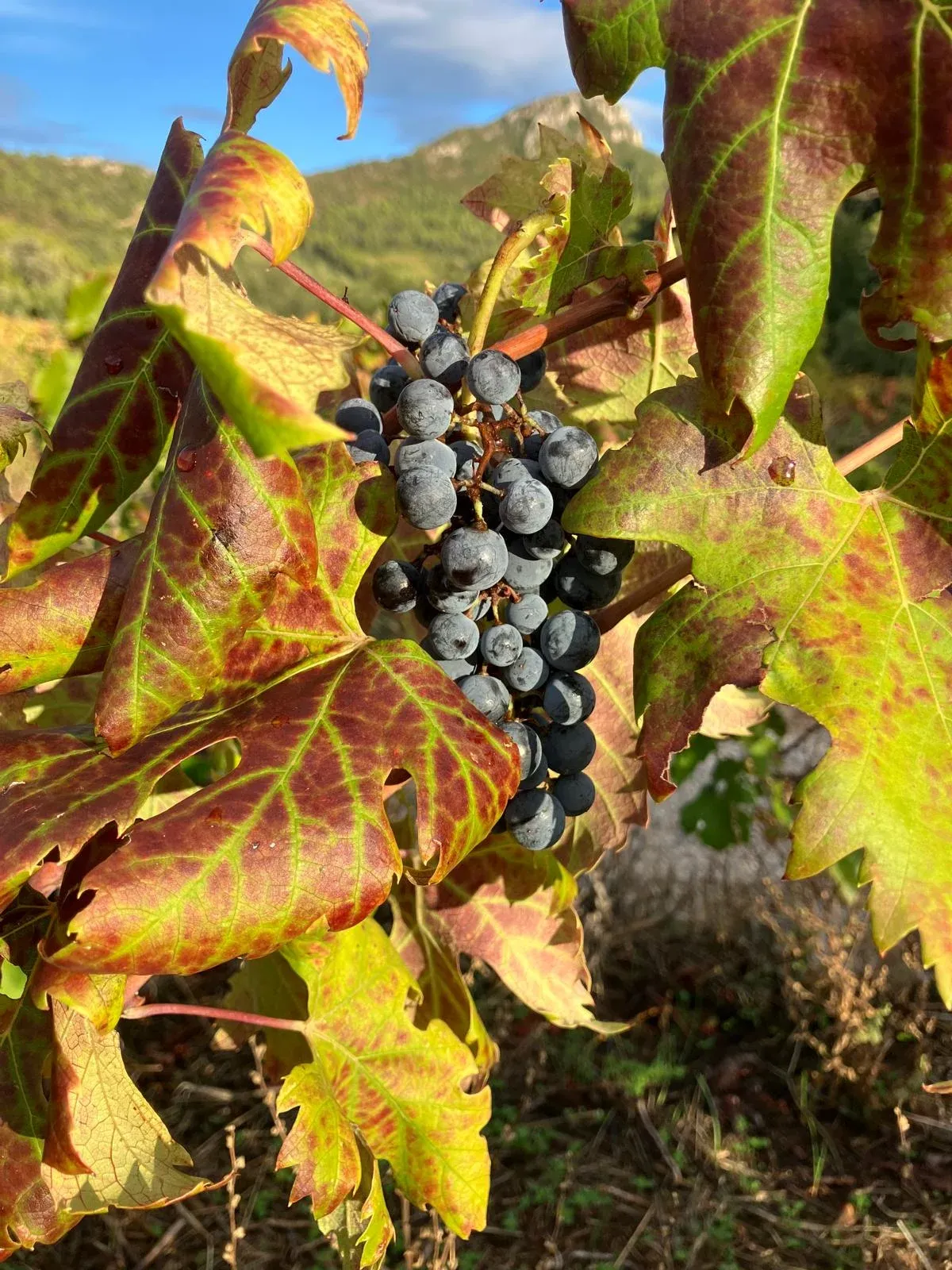
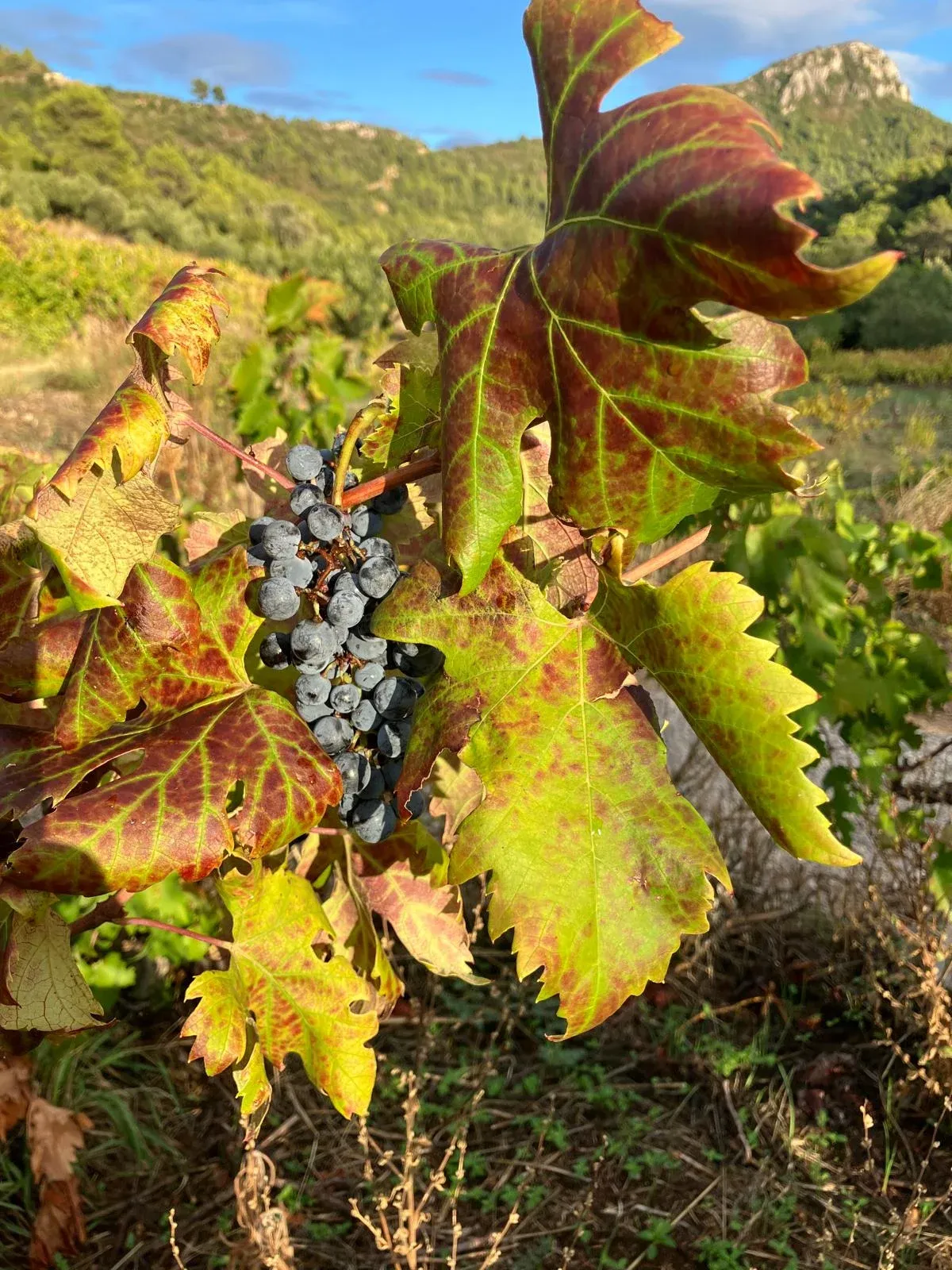
Plavac Mali in October: grapes in Žuljana, Pelješac
In October 2026 we stayed in Žuljana. Dark blue Plavac Mali grapes still hung on the vines there, among leaves that autumn had turned red and yellow. In the photos a rocky peak rises behind one bunch, and behind the other are rows of vines and hills in the low sun. For us, Plavac Mali is a red grape variety that is a phenomenon of the Pelješac peninsula. Our entry An evening in Žuljana comes from the same village.
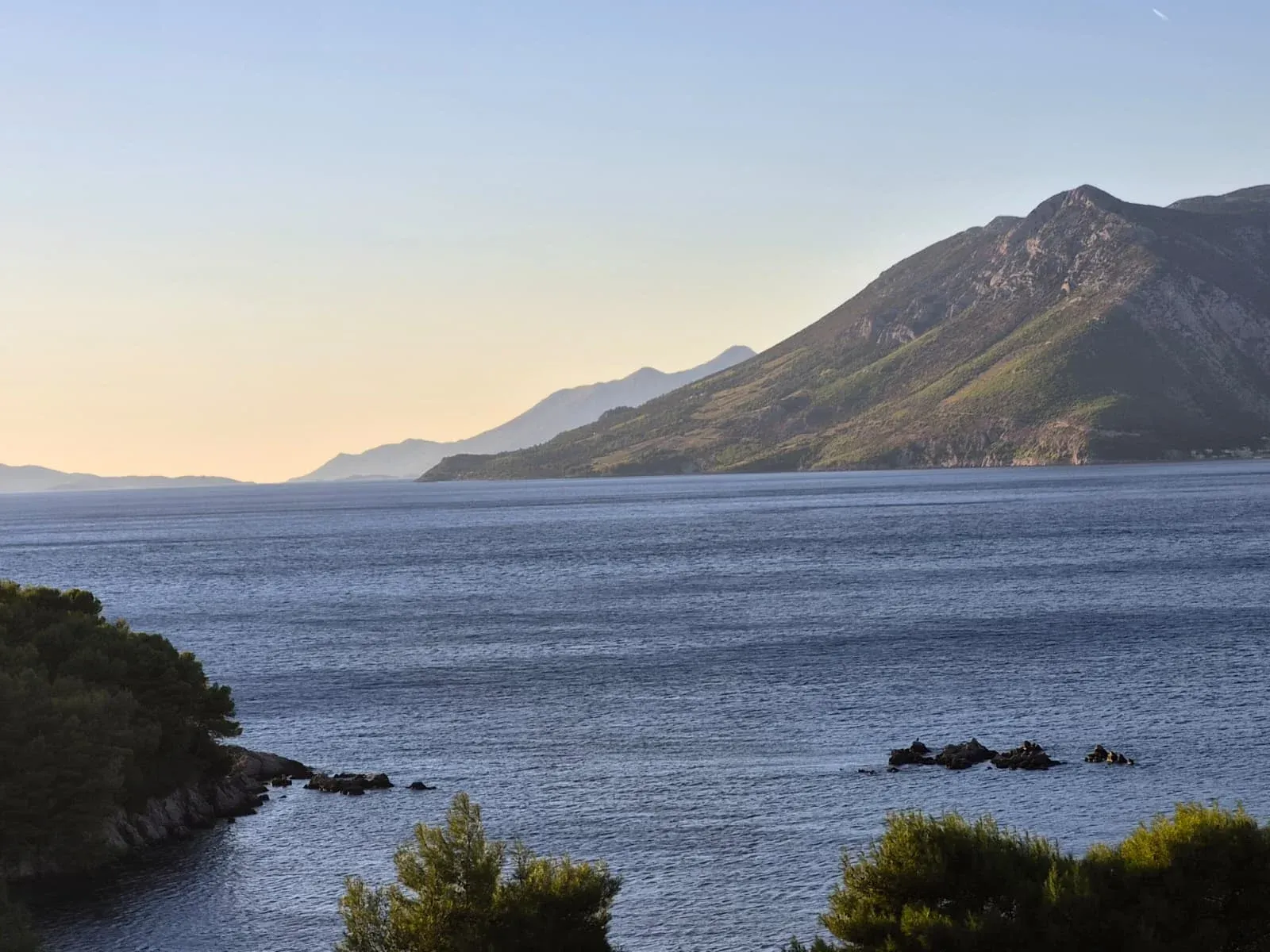
According to the Ston municipal tourist board, Žuljana is a village in the bay of the same name on the south side of the Pelješac peninsula. It appears in written records from the 12th century and took its name from the church of St Julian. The first guests came here in 1924. The people make their living from agriculture and tourism, above all from viticulture, olive growing and fishing. Home-produced wines are among the local products offered to visitors. The tourist board also highlights the many beaches. Trips to the island of Mljet are organised from here, and so is diving with local dive centres. The spatial plan of the Municipality of Ston lists Žuljana among the municipality’s 19 settlements, and county road ŽC 6226 links it with Dubrava. From Žuljana we looked across the sea towards Dingač.
The specification of the protected designation of origin Dingač, published by the Croatian Ministry of Agriculture, describes Plavac Mali as a native Croatian variety that has medium-late budbreak and ripens very late. The berries ripen over a long period, so one bunch often contains shrivelled, normally ripe and less ripe berries at the same time.
The full story of these producers is in the book.