Pelješac wineries
Wineries on the Pelješac peninsula, listed by area. Five of them have their own section below: where the winery is, which wines its website lists, and what it says there about visits. Ask each winery directly about opening hours and prices.
The list includes the wineries that name their village on their own websites; for the cooperative KUNA 1898 poljoprivredna zadruga, we use the village of its registered office. Facts in the sections come from the wineries' own websites, the Croatian court register, organisers' published results or the Dubrovnik-Neretva County Tourist Board, with a check date in each section. There is no ranking: within each area, the wineries are listed alphabetically.
Wineries by area
Links to the wineries' websites checked on 14 October 2026.
Postup–Orebić
- Korta KatarinaOrebićWinery website: kortakatarinawinery.com (opens in a new window)
Kuna
- BartulovićPrizdrinaWinery website: vinarijabartulovic.hr (opens in a new window)
- KUNA 1898, p.z.Kuna Pelješka
- Saints HillsOskorušnoWinery website: saintshills.com (opens in a new window)
- Vina PalihnićKuna PelješkaWinery website: peljeski-vinogradar.hr (opens in a new window)
- Vinarija RosoKuna PelješkaWinery website: vinarijaroso.com (opens in a new window)
- Vino ŠpaletaKuna PelješkaWinery website: vinospaleta.com (opens in a new window)
Potomje
- Bura cellarPotomjeWinery website: buracellar.com (opens in a new window)
- Dingač SkaramučaPijavičinoWinery website: dingac-skaramuca.hr (opens in a new window)
- Jurica vinoPotomjeWinery website: juricavino.com (opens in a new window)
- MadirazzaPotomjeWinery website: dingac.hr (opens in a new window)
- MatuškoPotomjeWinery website: matusko-vina.hr (opens in a new window)
- Vinarija LučićPijavičinoWinery website: vinarijalucic.wordpress.com (opens in a new window)
Putniković–Janjina
Ston–Ponikve
- Vinarija MilošBoljenovićiWinery website: milos.hr (opens in a new window)
- Vinarija ŠkurlaBroceWinery website: peljesac-vino.hr (opens in a new window)
Vina Palihnić, Kuna Pelješka
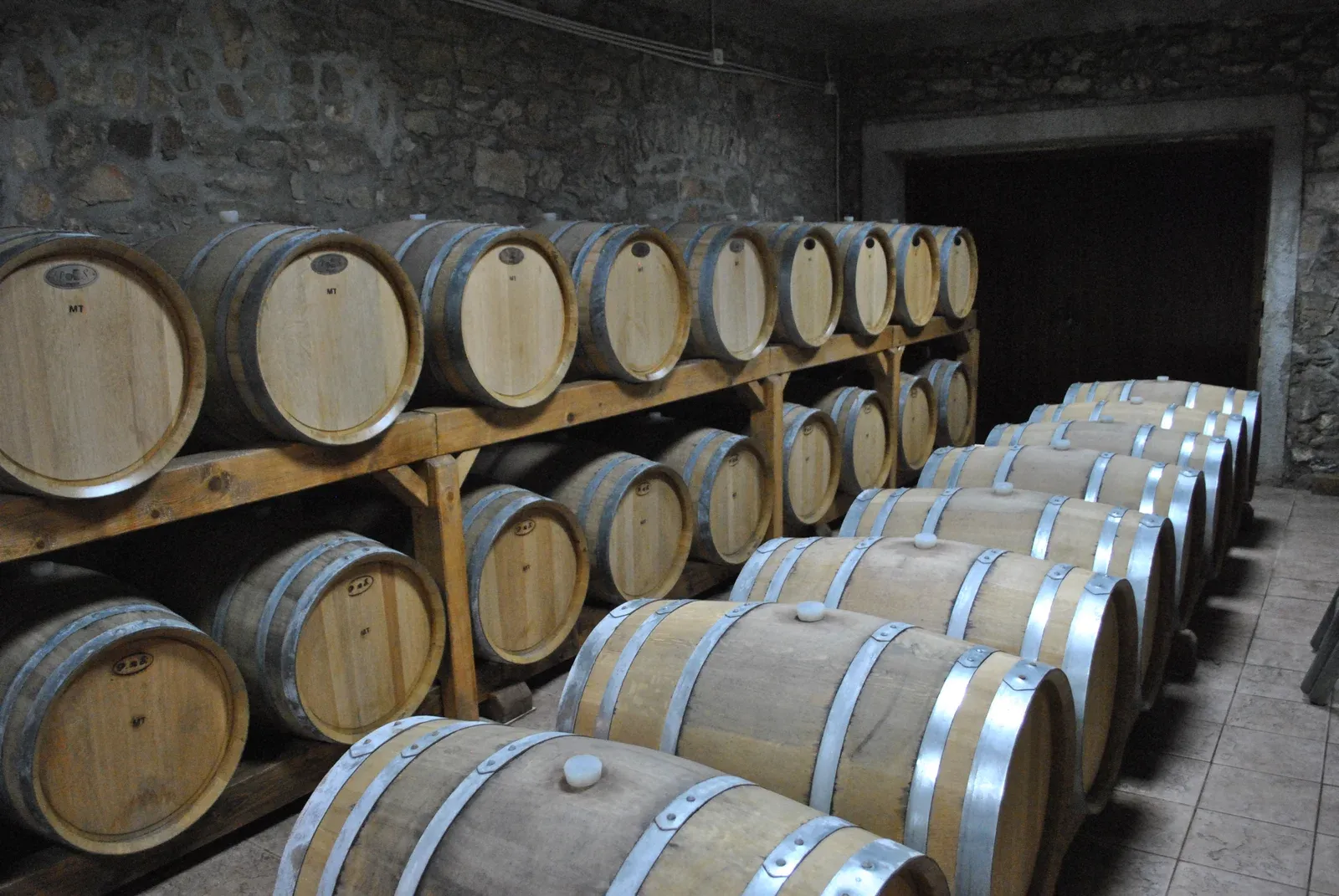
Vina Palihnić is the brand of PELJEŠKI VINOGRADAR d.o.o. from the village of Kuna Pelješka on the Pelješac peninsula. The winery lists red wines from the Plavac Mali grape, among them Dingač, Dingač Riserva and Postup, and the whites Rukatac and Pošip. At the Sabatina competition its Dingač 2017 was the champion among Plavac wines in 2019, and its Dingač Riserva 2018 received that title in 2020.
- Company
- PELJEŠKI VINOGRADAR d.o.o.
- Brand
- Vina Palihnić
- Village
- Kuna Pelješka
- Address
- Kuna 96, 20243 Kuna Pelješka
- Grape varieties
- Plavac Mali · Rukatac · Pošip
- Wines
- Dingač · Dingač Riserva · Postup · more on the winery's website
Facts checked on 14 October 2026 on the winery's website, in the court register and in the Sabatina results.
Before you go
Ask the winery directly about a visit, using the contact details on its website.
Where to find it
The winery gives its address on its website as Kuna 96, 20243 Kuna Pelješka. The same address appears in the list of wineries published by the Dubrovnik-Neretva County Tourist Board. Kuna Pelješka belongs to the Kuna area.
Visits
The winery's website does not describe visits or tastings; ask about them using the contact details on its website. The Dubrovnik-Neretva County Tourist Board includes the winery in its list of Pelješac wineries, and current details are on the board's page.
visitdubrovnik.hr: Pelješki vinogradar (opens in a new window)
Wines
According to its website, the winery makes red wines from the Plavac Mali grape, a rosé, the dessert wine Prošper and the white wines Rukatac and Pošip. Its website names eleven wines:
- Dingač Palihnić: vrhunsko vino (the Croatian top-quality wine category) from Plavac Mali from the steep slopes of Dingač, aged in oak barriques.
- Dingač Riserva Palihnić: vrhunsko vino from selected Plavac Mali grapes from the slopes of Dingač, more than two years in barriques.
- Postup Palihnić: vrhunsko vino from Plavac Mali.
- Plavac mali Selekcija Palihnić and Dragon's Blood Palihnić: vrhunsko vino from Plavac Mali.
- Plavac mali Palihnić, Plavac Barrique Palihnić, Rosé Palihnić and the dessert wine Prošper Palihnić: wines from Plavac Mali.
- Rukatac Palihnić and Pošip kvalitetno Palihnić: white wines in the Croatian kvalitetno vino (quality wine) category.
History
According to its own website, the family founded its winery in 1996, building on a tradition of life with the vine that it traces back to the 14th century. Today, according to the website, it tends about 60,000 vines of its own, works with more than 50 growers and makes about 700,000 litres of wine, 50,000 litres of which age in oak barriques.
Awards
The result lists of the Sabatina competition, organised by Zadružni savez Dalmacije, give these awards for wines of PELJEŠKI VINOGRADAR d.o.o. from Kuna Pelješka (the organiser's titles in the original wording):
- Sabatina 2016: “Šampioni plavaca” (Plavac champions), Dingač 2015.
- Sabatina 2019: “Šampion vina sorte plavac” (champion among Plavac wines), Dingač 2017.
- Sabatina 2020: “Šampion vina sorte plavac”, Dingač Riserva 2018; gold medal for Dingač 2019.
- Sabatina 2022: “Šampion - najbolje vino Sabatine i najbolje vino sorte plavac” (champion: best wine of Sabatina and best Plavac wine), Dingač 2019; “Velika zlatna medalja za kvalitetu proizvoda” (grand gold medal for product quality) for Dingač Riserva 2015; gold medals for Postup 2019 and Plavac mali Selekcija 2019.
- Sabatina 2025: gold medal for Dingač Riserva 2019 and silver for Dingač 2022.
More awards for wines from Pelješac: Pelješac wine awards.
Questions
Can you visit the Palihnić winery and taste the wine?
The winery's website does not describe visits or tastings; check with the winery in advance whether a visit is possible.
Which awards have Palihnić wines won?
At the Sabatina competition, Dingač 2017 was the champion among Plavac wines in 2019, and Dingač Riserva 2018 in 2020.
Madirazza winery, Potomje
The Madirazza winery (MADIRAZZA d.o.o.) is based in the village of Potomje on the Pelješac peninsula. It makes wines from the local grape varieties Plavac Mali, Pošip, Grk and Rukatac. Its vineyards on Pelješac cover more than 20 hectares, and it names Dingač and Postup as its most important sites for Plavac Mali.
- Winery
- MADIRAZZA d.o.o. (brand MADIRAZZA VINA)
- Village
- Potomje
- Address
- Potomje 49a, Potomje 20244 (as given on its Contact page)
- Grape varieties
- Plavac Mali · Pošip · Grk · Rukatac
- Vineyards
- more than 20 ha on Pelješac
- Sites
- Dingač · Postup
Facts checked on 14 October 2026 on the winery's website and in the court register.
Before you go
The winery invites visitors on its website and gives its address in Potomje. Agree on a date and the details of your visit in advance through the contact form on its website.
Where to find it
The winery gives its address as Potomje 49a, Potomje 20244. Potomje belongs to Općina Orebić and to the Potomje area. A map and current contact details are on the winery's website, dingac.hr.
Visits
On its website the winery invites visitors (“Posjeti nas”, visit us). Use the contact form on the winery's website to ask whether a visit is possible and what arrangements apply. Madirazza wines can also be bought in the online shop on the winery's website.
Madirazza wines: Dingač, Postup and more
- Dingač: Dingač Nobile, with the site given as “najstariji vinogradi položaja Dingač” (the oldest vineyards of the Dingač site); Dingač Grande Riserva, from “starih, strmih vinograda položaja Dingač” (old, steep vineyards of the Dingač site); also Dingač Selekcija and Dingač Tramontana 9bf. Dingač is an EU protected designation of origin.
- Postup: Postup Madirazza, with the site given on the website as “Postup Pelješac”.
- Plavac Mali: Plavac Mali Selekcija Madirazza.
- White wines: Pošip Madirazza; Pošip Garbinada 8bf from grapes from the sites printed as “Smokvice i Čare” (Smokvica and Čara) on the island of Korčula; Vino Grk Herakles; D'Oro Nobile, a blend of Pošip and Grk; and the sparkling Rukatac Madirazza Pet Nat.
The current range and prices are on the winery's website, dingac.hr.
Questions
Can you visit the Madirazza winery?
The winery invites visitors on its website and gives its address in Potomje. Arrange a date and the terms of a visit in advance through the contact form on dingac.hr.
Where does Madirazza's Dingač come from?
According to the winery, Dingač Nobile comes from the oldest vineyards of the Dingač site, and Dingač Grande Riserva from old, steep vineyards there. Dingač is an EU protected designation of origin.
Matuško winery, Potomje
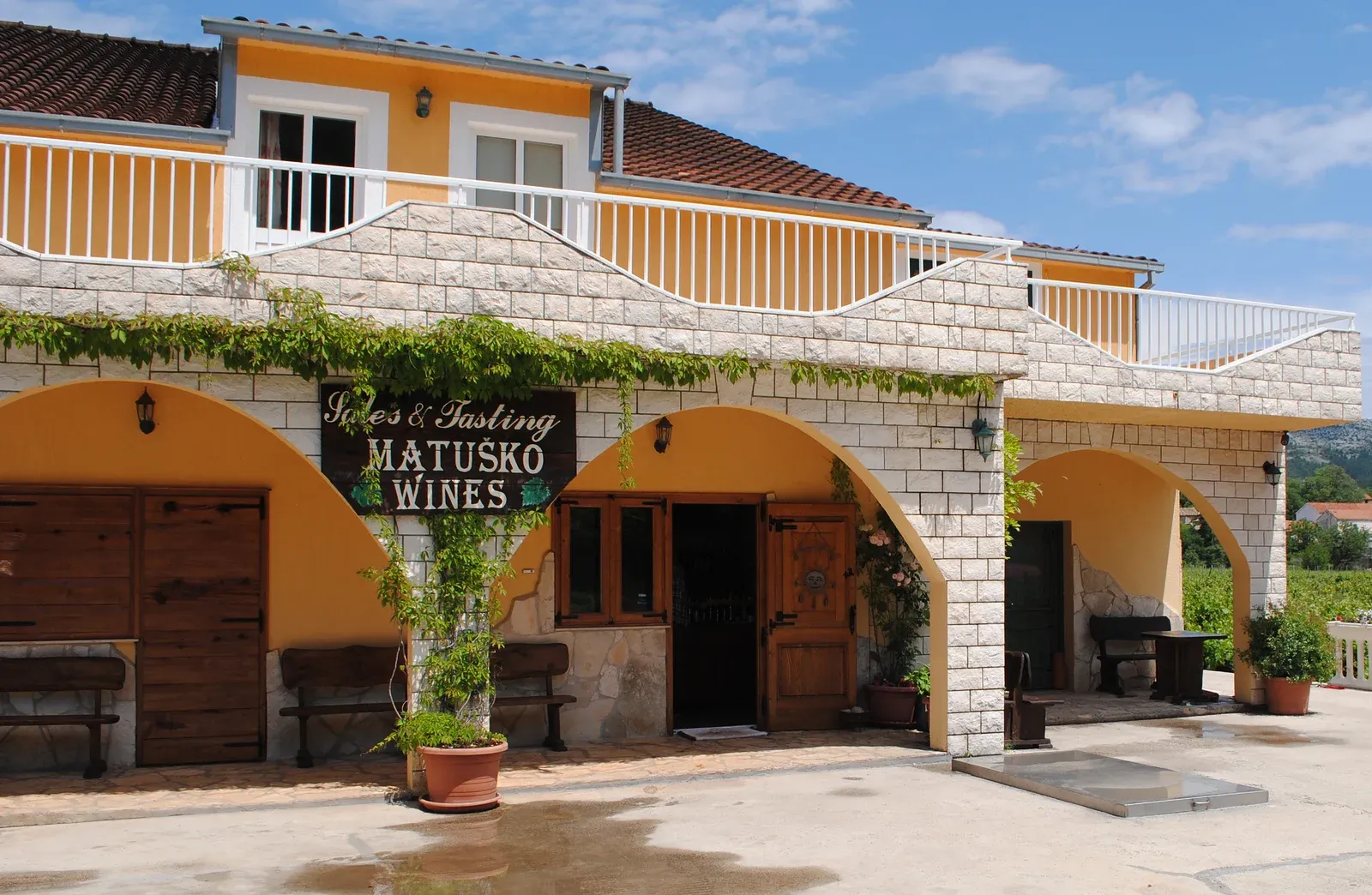
The Matuško winery has its cellar and tasting room in the village of Potomje on the Pelješac peninsula. You book a tasting through the reservation form linked from the winery's website. Its website lists the red wines Plavac, Dingač, Zinfandel and Postup and whites such as Pošip, Rukatac and Chardonnay, and says it first made wine for the market in 1997.
- Village
- Potomje (Općina Orebić)
- Company
- MATUŠKO-VINA d.o.o.
- First wine for the market
- 1997 (according to the winery)
- Red wines
- Plavac · Dingač · Zinfandel · Postup · Cuvee
- White wines
- Pošip · Graševina · Rukatac · Chardonnay · Cuvee
Facts checked on 14 October 2026 on the winery's website, in the court register and in the Sabatina results.
Before you go
According to its website, the cellar and the oil mill are open for tastings and visits. To book a tasting, use the form accessed via Degustacije in the website menu.
Where to find it
The winery says its vineyards and the winery itself are on the sunny slopes of Pelješac, in the village of Potomje, which belongs to Općina Orebić. The exact address and contact details are on its website's Contact page; check the directions there too. Its Locations page lists, besides the cellar and tasting room in Potomje, a restaurant called Dingač at Borak. Potomje belongs to the Potomje area.
Visits and tastings
According to the winery, the cellar has a tasting and conference hall where its wine is served with local food from a caterer. Its website says the cellar and the oil mill are open for tastings and visits. To book a tasting, use the form accessed via Degustacije in the website menu. Ask the winery about opening hours and prices through its website, matusko-vina.hr.
Wines
On its website the winery lists Plavac, Dingač, Zinfandel, Postup and Cuvee among its reds, and Pošip, Graševina, Rukatac, Chardonnay and Cuvee among its whites.
Dingač and Postup are names of vineyard sites on Pelješac where the Plavac Mali grape grows.
Wine can be ordered through the form accessed via Webshop in the website menu.
History
According to its own website, the winery first made wine for the market in 1997, in a small winery in Potomje. The court register lists MATUŠKO-VINA d.o.o. with a founding declaration dated 11 December 1997. Today the winery cites a cellar of more than 3,000 m², where wine also ages in barriques, and says its wines are sold as far away as China.
Awards
At the Sabatina wine assessment, organised by Zadružni savez Dalmacije, the organiser's result lists name these wines of MATUŠKO VINA d.o.o. from Potomje:
- Sabatina 2025: gold medal for Pošip Battonage 2024.
- Sabatina 2022: silver medals for Grk 2021 and Zinfandel Selection 2018.
- Sabatina 2021: “Šampion vina sorte plavac” (the organiser's title: champion among Plavac wines), MATUŠKO VINA d.o.o., Dingač Reserva 2013.
More awards for wines from Pelješac: Pelješac wine awards.
Questions
Can you visit the Matuško winery?
Yes. According to its website, the cellar and the oil mill are open for visits and tastings, and the cellar has a tasting hall.
How do I book a tasting at Matuško?
Use the form accessed via Degustacije in the winery's website menu.
Skaramuča winery, Pijavičino
The Skaramuča winery is based in the village of Pijavičino on the Pelješac peninsula. According to the winery, its vineyards lie on the southern slopes of Dingač and cover 20 ha. It makes Dingač, Dingač Reserva, Postup, Plavac and Plavac Premium from the Plavac Mali grape and also sells them through the online shop on its website.
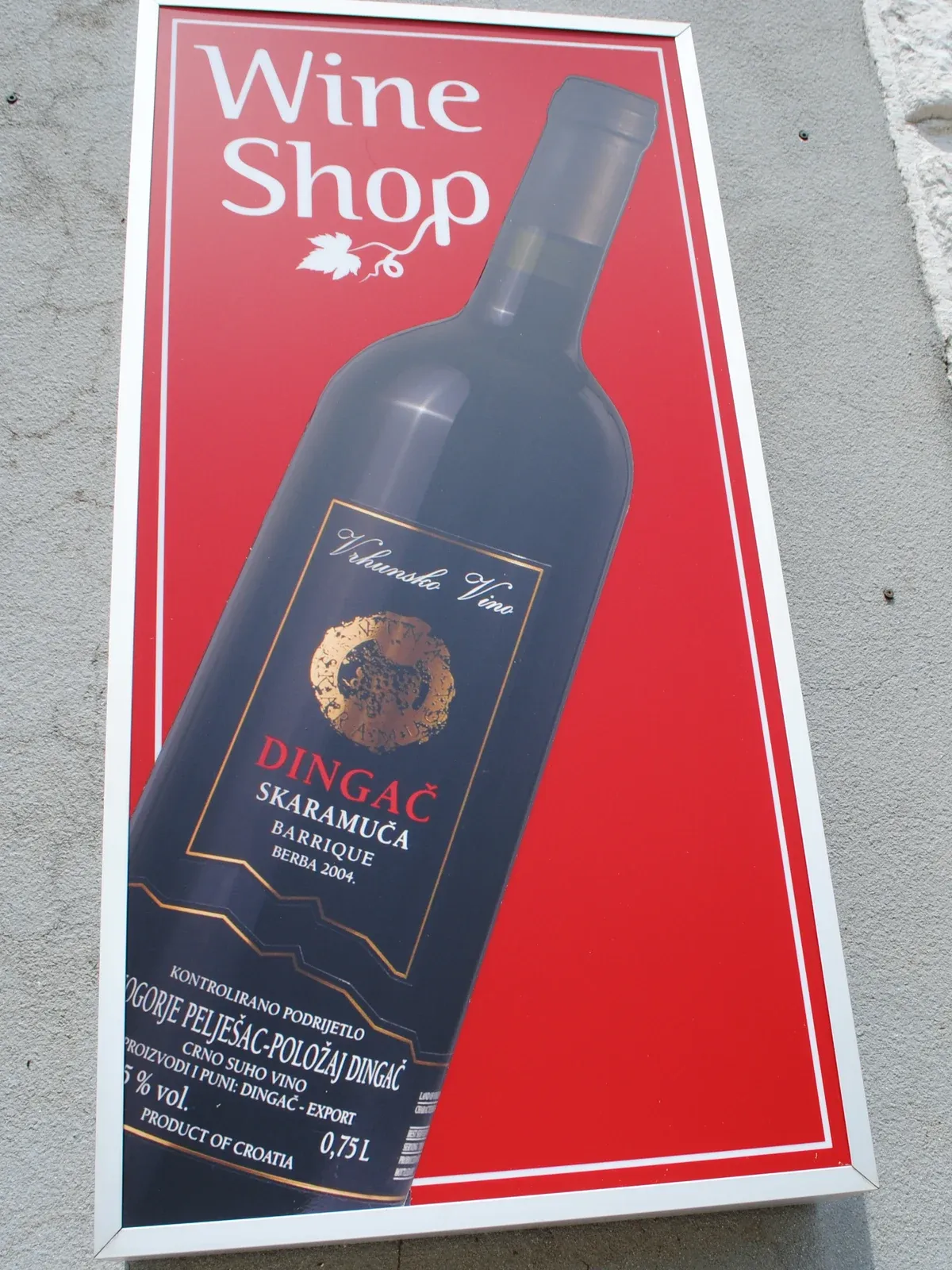
- Company
- DINGAČ - SKARAMUČA d.o.o.
- Legal form
- limited liability company (d.o.o.)
- Village
- Pijavičino
- Address on its website
- Pijavičino, 20244 Potomje, Pelješac
- Vineyards
- 20 ha on the southern slopes of Dingač (according to the winery)
- Grape variety
- Plavac Mali
- Wines
- Dingač · Dingač Reserva · Postup · Plavac · Plavac Premium · Pošip · Rose
Facts checked on 14 October 2026 on the winery's website and in the court register.
Before you go
Ask about a visit through the contact form on the winery's website.
Where to find it
The winery gives its address as Pijavičino, 20244 Potomje, Pelješac. The page with details of the online shop's point of sale gives the address Gornje Pijavičino 7, 20244 Potomje. Pijavičino belongs to the Potomje area.
Visits
The winery's website does not mention tastings or tours today. For any questions it offers a contact form, which you can also use to ask about a visit.
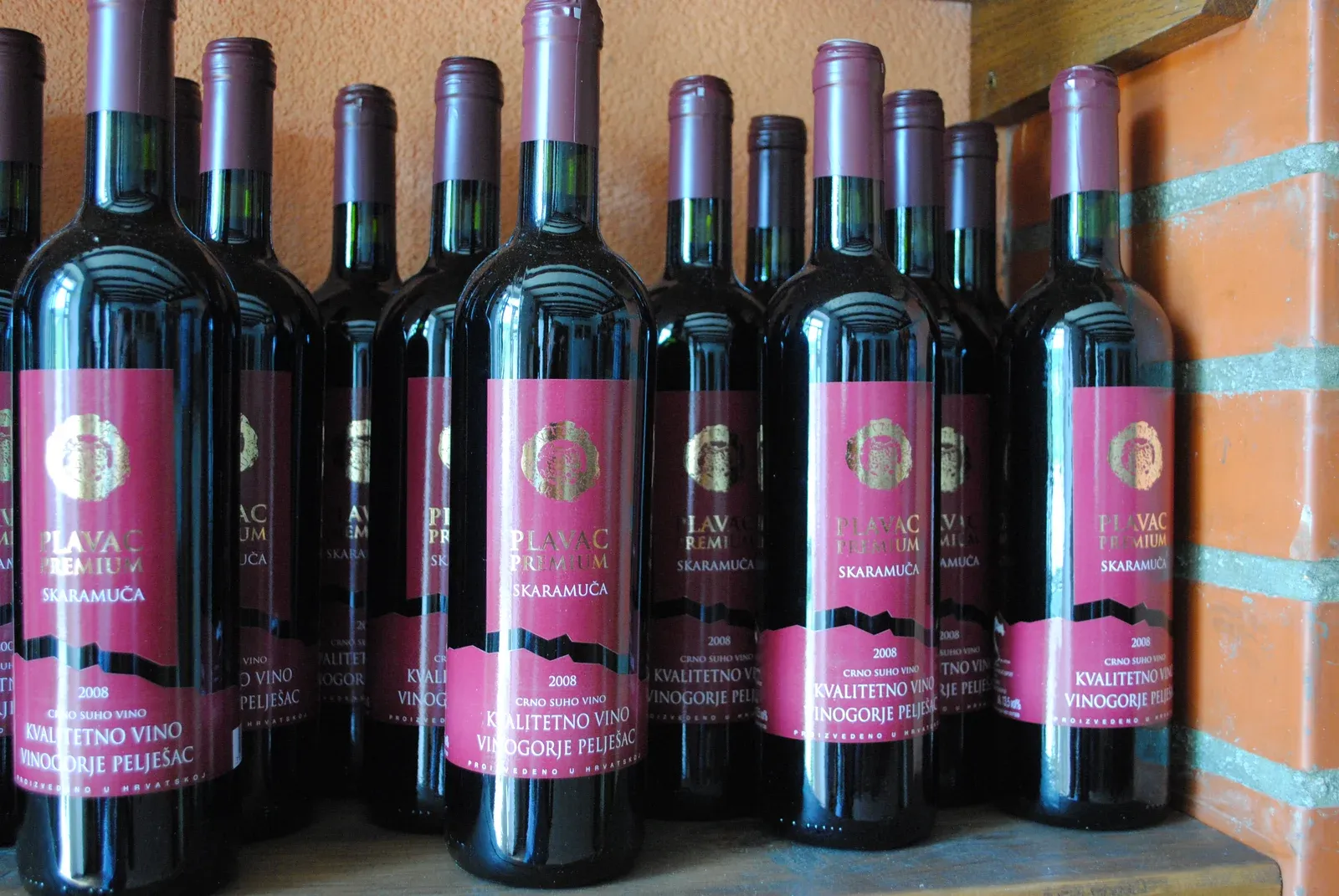
Wines
- Dingač: vrhunsko vino (the Croatian top-quality wine category) from Plavac Mali. Dingač is an EU protected designation of origin (eAmbrosia, PDO-HR-A1649).
- Dingač Reserva: according to the winery, a selection of the best Plavac Mali grapes, aged in small oak barrels.
- Postup: vrhunsko vino from Plavac Mali, according to the winery exclusively from the Postup site on the southern slopes of Pelješac. Postup is a vineyard site, not an EU protected designation of origin.
- Plavac and Plavac Premium: kvalitetno vino (the Croatian quality wine category) from Plavac Mali.
- Rose: a dry rosé made from Plavac Mali, in the Croatian kvalitetno vino (quality wine) category.
- Pošip and the Elegance line (Dingač Elegance, Plavac Elegance, Pošip Elegance, Crljenak Elegance).
History
According to the winery, its story begins in 1992, when its founder was able to start working as a private grape grower and wine producer in Croatia. According to the winery's website (as of October 2026), the cellar holds 600,000 litres in stainless steel tanks and oak barrels, and the wines are exported to more than 25 countries.
Where to buy Skaramuča wine
The winery runs an online shop on its website, with delivery within Croatia and abroad. Prices and terms are given there.
Questions
Can you visit the Skaramuča winery?
The winery's website does not mention tastings or tours. Ask through the contact form on its website.
Where can I buy Skaramuča wine?
In the winery's online shop, with delivery within Croatia and abroad.
Grgić winery, Trstenik
The Grgić vina winery is in Trstenik on the Pelješac peninsula. On its website it invites visitors to the cellar to taste its wines, with booking through a form that has a reservation-date field. It lists two wines there: a red Plavac Mali made from grapes from Dingač and other sites, and a white Pošip.
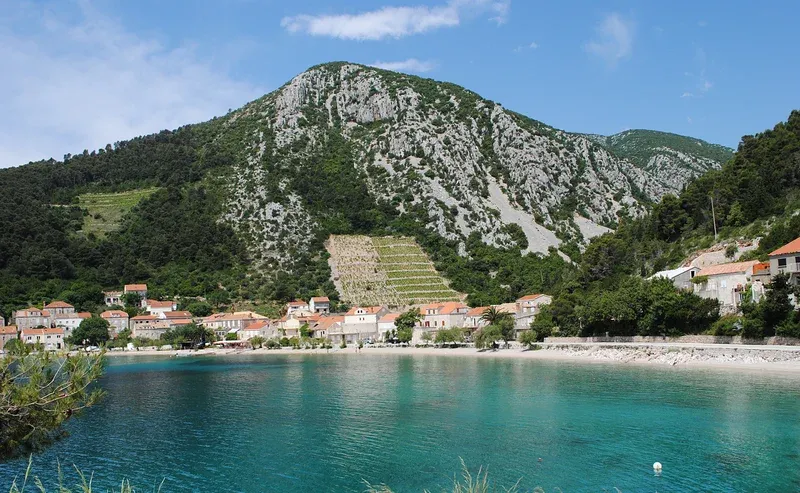
- Winery
- Grgić vina (GRGIĆ VINA d.o.o.)
- Village
- Trstenik, Pelješac
- Wines on its website
- Plavac Mali · Pošip
- Vineyard site (Plavac Mali)
- Dingač among others
- Founded
- 1996 (as the winery states)
Facts checked on 15 October 2026 on the winery's website, in the Croatian court register, Croatian encyclopaedias, US museum and congressional records and TIME's 1976 report.
Before you go
On its website the winery invites visitors to its wine cellar in Trstenik to taste its wines. You book through the form on its contact page, which has a field for the reservation date.
Where to find it
The Grgić winery is in Trstenik on the Pelješac peninsula, in the Putniković–Janjina area. The exact address and contact details are on the winery's website, grgic-vina.com.
Visits and tastings
The contact page of the winery's website has a form with a field for the reservation date, and the home page asks you to book a slot. Ask about opening hours and visiting arrangements there too.
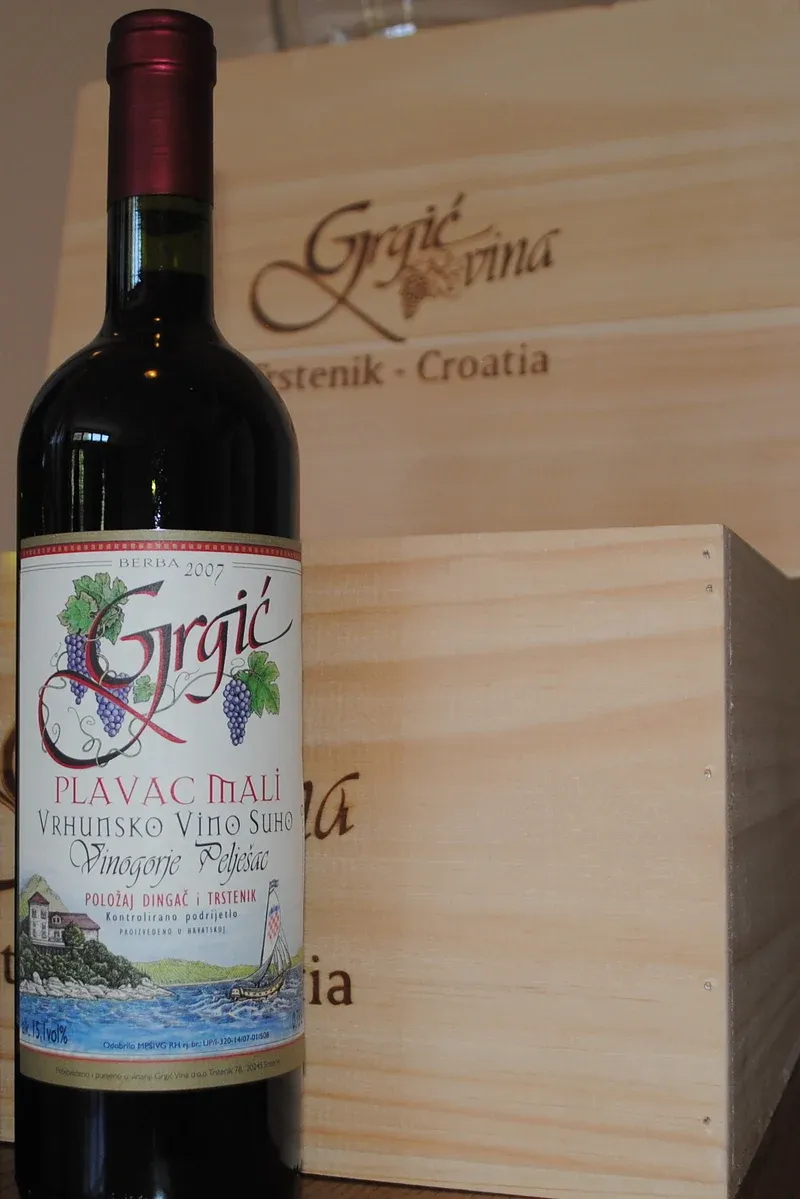
Wines: Plavac Mali and Pošip
The winery's website shows two wines today, a red Plavac Mali and a white Pošip; the winery says it concentrates on exactly these two Croatian grape varieties. According to the winery, all its wines are in the vrhunsko vino category (the Croatian top-quality wine category).
According to the winery, it selects grapes for its Plavac Mali from the best vineyards of well-known sites, including Dingač, which is entered in the EU register as a protected designation of origin. The Plavac Mali ferments with natural yeasts and ages in French oak barrels.
According to the winery, the grapes for the Pošip come from the Čara area on the island of Korčula. The Pošip is made from the white Pošip grape, ferments slowly at a low temperature and also ages in French oak barrels. The winery also says it pays particular attention to ecological cultivation.
History: Mike Grgich and the winery
One of the winery's founders, Miljenko “Mike” Grgich (in Croatian, Miljenko Grgić), was born in Desne near Metković on 1 April 1923. He arrived in California's Napa Valley in 1958 and worked at several wineries there. In 1972 he joined Chateau Montelena as its winemaker.
On 24 May 1976, French judges in Paris blind-tasted six California Chardonnays against four white Burgundies. TIME reported the result on 7 June 1976 under the title “Judgment of Paris”. First among the white wines was the Chateau Montelena 1973, the Chardonnay Grgich had made there.
In 1977 he co-founded the Grgich Hills winery in the Napa Valley. According to the winery, the family winery Grgić vina was founded in 1996 to make wine from native Dalmatian grape varieties, and it names Grgich among its founders. The Croatian court register lists it as the company GRGIĆ VINA d.o.o. Grgich died in Calistoga, California, on 13 December 2023, aged 100.
Questions
Can you visit the Grgić winery?
Yes. On its website the winery invites visitors to its wine cellar in Trstenik to taste its wines. You can book a date through grgic-vina.com.
Who founded the Grgić winery?
According to the winery, it was founded in 1996, and it names the Napa Valley winemaker Miljenko “Mike” Grgich among its founders.
Is Grgić's Plavac Mali from Dingač?
The winery says it selects grapes from the best vineyards of well-known sites, among them Dingač, a protected designation of origin.
In the book
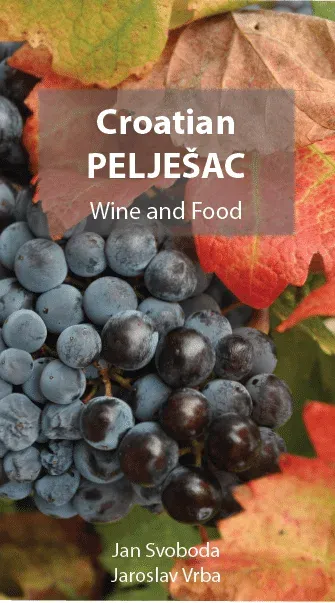
Every winery on this list is one of the 41 wineries in five areas of Pelješac that we describe in our book Croatian Pelješac — Wine and Food.
Common questions
Do you sell wine?
No. To buy wine, contact the winery directly; the list above links to each winery's website where it has one.