Pelješac Food: What to Eat on the Peninsula
Food on Pelješac comes from the sea and from stony terraced land. The Croatian Encyclopedia lists olives and oranges among the crops of the peninsula and oysters and mussels among its farmed seafood. Add sea salt, fish stews, almond sweets and varenik, cooked grape must, and you have most of what ends up on the table.
Oysters and mussels from Mali Ston Bay
The bay holds the peninsula's shellfish-growing waters. According to the Ston tourist board, only two species are farmed there: the European flat oyster (Ostrea edulis) and the Mediterranean mussel (Mytilus galloprovincialis). Oysters are mostly eaten fresh and alive, on ice, as a cold starter. The tourist board calls the mussels a well-known local delicacy in their own right, a little in the shadow of the oysters. They grow in mesh sleeves hanging from ropes, mostly on floating farms.
The tourist board writes that only the flat oyster was farmed here at first and that mussel farming began in the early 20th century. The oyster's product specification gives an earlier date: in 1889, Captain Stijepo Bjelovučić founded the "Prvo dalmatinsko racionalno gojilište kamenica i klapavica" in Sutvid cove near Drače. The bay has been protected as a special marine reserve since 1983.
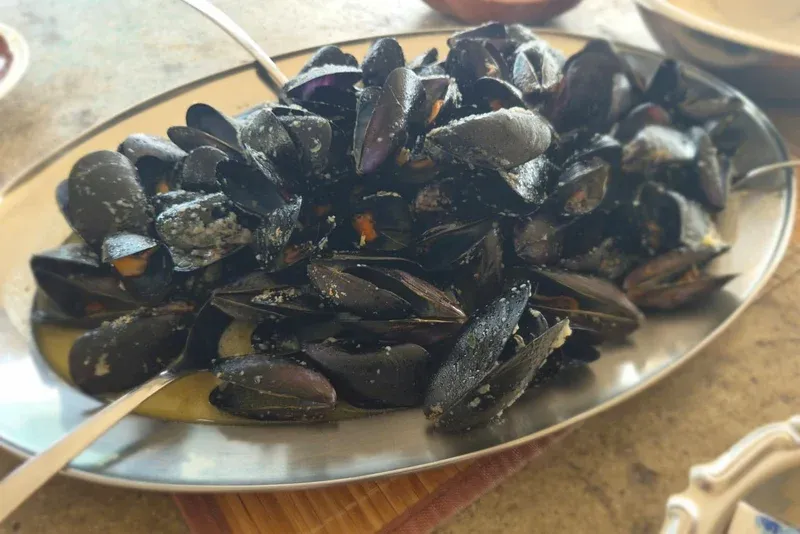
For the Dubrovnik region, the county tourist board describes mussels na buzaru as mussels with olive oil, parsley, garlic and wine. We come back to Drače on the north coast for oysters every year; in October 2026 we also had the mussels in the photo below. Everything about the oysters themselves, from the protected name to the farming, is on our oyster page.
Ston salt in the kitchen
The same encyclopedia says salt was already extracted at Ston in the Roman period. In the kitchen, the local tourist board pairs the town's "famous grains" of salt with a few drops of olive oil to finish a fish brodet. The saltworks and their history have their own page, and a whole fish baked in coarse salt is in our recipe for sea bass in a salt crust.
Pelješac olive oil
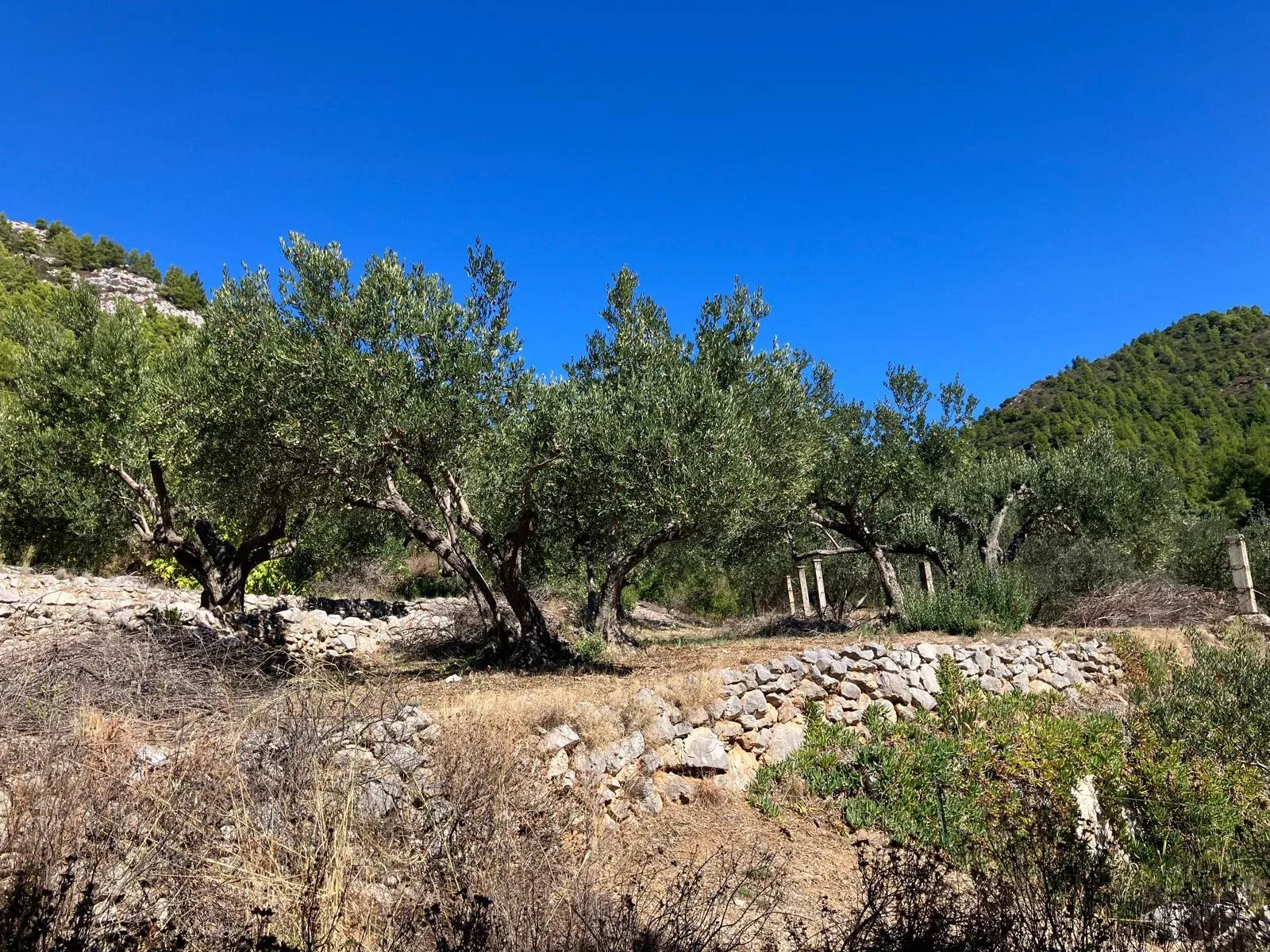
A 2005 study in Pomologia Croatica describes three native varieties of the peninsula: Paštrica, Sitnica and Česminka. In 2024, for example, the advisory service of Croatia's agriculture ministry reported picking under way in all olive-growing areas on 29 October and again on 5 November. We saw the olives ripening in October 2026 and wrote about it in our olive harvest diary.
The Trpanj tourist board's olive-oil trail runs six kilometres from the Vrila campsite past restored centuries-old groves and dry-stone walls, and the Orebić tourist board describes a 19th-century olive mill of the Dubrovnik Sorkočević family as a museum exhibit. A 2011 tourism plan for Pelješac cited estimates of more than 160,000 olive trees on the peninsula in the late 1980s and estimated the quantity of olives processed there at about 1,500 tonnes a year.
Pelješac olive oil has no protected name in the EU register eAmbrosia; the olive oils from Croatia registered there include one from the island of Korčula, but none from the peninsula. Local producers may apply for the national Hrvatski otočni proizvod (Croatian island product) label, which is open to businesses on the islands and on the Pelješac peninsula.
Fish, black risotto and meat dishes
The Ston tourist board names brodet, a stew of sea fish or seafood, among the town's dishes, and brodet from Adriatic fish and seafood is on the list of heritage dishes in Croatia's 2011 standard for catering establishments serving "Hrvatska autohtona kuhinja" (Croatian native cuisine). A product study for Pelješac tourism, hosted on the Orebić tourist board's website, also lists dried fish cooked white or black, fish baked in salt and black cuttlefish risotto among the traditional dishes of the peninsula.
The risotto takes its colour from cuttlefish or squid ink, as the county tourist board explains. A brochure from the four tourist boards of the peninsula suggests grated cheese with it and a glass of red Pelješac wine. For meat, the county tourist board describes peka across its region: most often veal, suckling pig or lamb, with potatoes and vegetables. We have eaten it on Pelješac, and we have cooked it ourselves too.
Red wine and vineyards
According to the Croatian Chamber of Economy, Plavac Mali is the country's most significant native grape variety, and the best of its wines come from the Dingač and Postup vineyards on Pelješac. Dingač, an area of steep slopes on the southern coast of the peninsula, is an EU protected designation of origin for wine. Our page about Dingač wine explains both areas, and our directory lists wineries on the peninsula.
Ston cake and other sweets
The best-known sweet is Ston cake, in Croatian stonska torta od makarula or stonski makaruli: cooked macaroni baked with nuts, sugar and eggs in a pastry case. The county tourist board describes it as typical of Pelješac and enjoyed throughout the Dubrovnik-Neretva region. It is on the same national list of heritage dishes as brodet, and so is pelješka torta od mijendula, the local almond cake.
In Ston, the tourist board also names candied almonds and arancini and limuncini, candied orange and lemon peel, as old delicacies of the Dubrovnik area. The Orebić tourist board adds klašuni, rozata (a flan), fritule and krostule. Mantala, a sweet made from cooked grape must, is made on Pelješac too, according to the Konavle museums, and is prepared at the time of the grape harvest.
Varenik, figs, carob and honey
Varenik is reduced grape must. Dubrovnik-Neretva County calls it a traditional product of Pelješac, and Slow Food has a presidium for it. According to Slow Food, it is used as a dressing for salads and meat and in traditional dishes, among them a local beef stew and sweets such as mantala. In November 2025, a cooking workshop on varenik was held at the Museum of Viticulture and Winemaking in Putniković.
Figs belong to the same landscape: the Trpanj tourist board describes dry-stone walls built to clear the karst for vines, olives and figs, and the Orebić tourist board associates the village of Lovište with carob, figs, almonds and olive oil. Dalmatian honey, Dalmatinski med, received protected designation of origin status in the EU in 2024, according to Croatia's Ministry of Agriculture. Its specification covers four Dalmatian counties, including Dubrovnik-Neretva, which takes in Pelješac, and mentions a beekeepers' cooperative founded in Janjina on the peninsula in 1910.
Food festivals through the year
Ston celebrates the oyster in mid-March around the feast of St Joseph on 19 March, when, the tourist board says, oysters taste best; Dani malostonske kamenice (the Mali Ston oyster days) began in 2012, organised by the tourist board and the municipality. The town's salt festival, Festival soli, had its tenth edition in 2026. At Buzarijada in Brijesta, the same tourist board reports, mussels na buzaru and a cuttlefish stew were cooked for visitors.
Frequently asked questions
- What food is Pelješac known for?
- Oysters and mussels from the bay of Mali Ston, salt, olive oil, fish brodet, Ston cake and varenik, cooked grape must.
- Does Pelješac olive oil have a protected name?
- Not in the EU register eAmbrosia, which lists olive oils from Croatia such as one from Korčula, but none from the peninsula. Producers on the peninsula can apply for the national Hrvatski otočni proizvod label.
- What is Ston cake?
- A baked sweet of cooked macaroni with nuts, sugar and eggs in a pastry case, called stonska torta od makarula or stonski makaruli in Croatian.
- When is the best time for oysters in Ston?
- The local tourist board says oysters taste best in mid-March, around St Joseph's Day on 19 March, when the oyster days are held.
- What is varenik?
- Reduced grape must. Dubrovnik-Neretva County calls it a traditional Pelješac product, and it goes into sweets such as mantala.
Pelješac food in the book
The book's chapter Ingredients and recipes covers salt, oysters, octopus, fish, olives and wine with food: see the book.